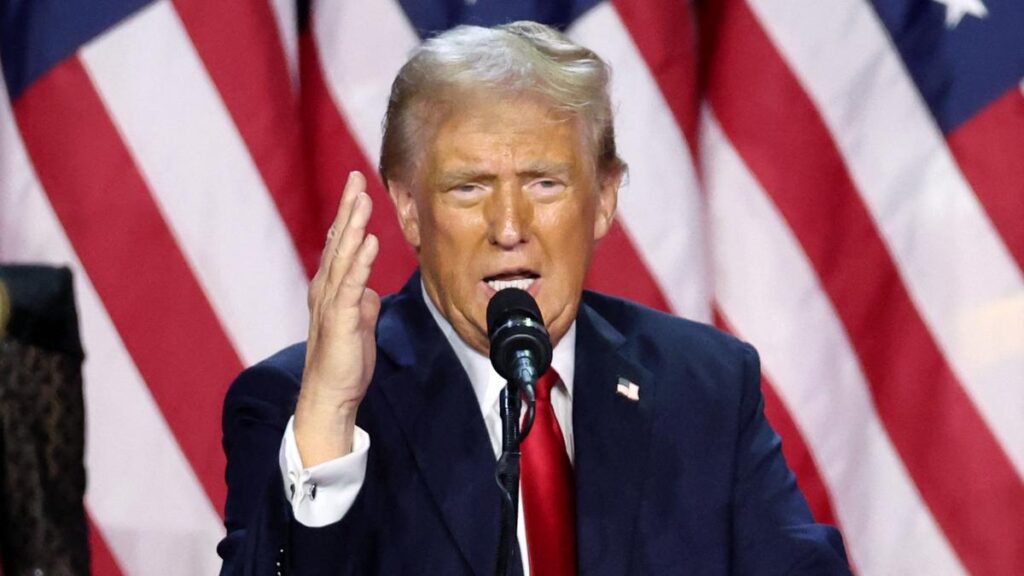
In a stunning turn of events, former President Donald Trump has reclaimed the White House, defeating incumbent President Joe Biden in the 2024 U.S. presidential election. The election results, marked by significant voter turnout and a deeply polarized electorate, have reshaped the political landscape of the United States. As analysts sift through the data, several key trends and insights emerge, illustrated through various charts that highlight the dynamics of this historic election.

Voter Turnout: A Record Engagement
One of the most notable aspects of the 2024 election was the record voter turnout, with approximately 68% of eligible voters participating. This figure represents the highest turnout rate for a presidential election in over a century. The surge in engagement can be attributed to heightened political awareness, grassroots mobilization, and the contentious nature of the race.
Chart 1: Voter Turnout by Demographic
- Age Group: Young voters (ages 18-29) accounted for nearly 50% of their demographic, a significant increase from previous elections. This group was motivated by issues such as climate change, social justice, and economic inequality.
- Race and Ethnicity: While Trump maintained strong support among white voters, Biden’s coalition of Black, Hispanic, and Asian voters showed signs of fragmentation, with some groups shifting toward Trump, particularly in key battleground states.
Battleground States: The Key to Victory
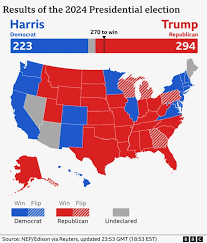
Trump’s victory was largely attributed to his performance in critical battleground states that had previously leaned Democratic. States like Pennsylvania, Wisconsin, and Michigan, which Biden won in 2020, flipped back to Trump in 2024, showcasing the shifting political landscape.
Chart 2: Electoral Votes by State
- Trump’s Gains: Trump secured 306 electoral votes, winning pivotal states by narrow margins. His campaign focused on economic issues, appealing to working-class voters who felt left behind by globalization and technological change.
- Biden’s Losses: Biden’s losses in traditionally Democratic strongholds raised questions about the party’s ability to maintain its coalition. The Democratic Party’s failure to connect with certain voter segments, particularly in the Midwest, proved detrimental.

Key Issues Driving Voter Decisions
The 2024 election was characterized by a range of pressing issues that influenced voter preferences. Economic concerns, healthcare, and social issues dominated the discourse, shaping the candidates’ messaging and strategies.
Chart 3: Top Issues for Voters
- Economy: Economic recovery post-pandemic was the top concern for voters, with many expressing dissatisfaction with inflation and rising costs. Trump’s campaign effectively capitalized on these concerns, promising to restore economic growth and job creation.
- Healthcare: Healthcare remained a critical issue, particularly in light of the COVID-19 pandemic. While Biden emphasized expanding access to healthcare, Trump focused on reducing costs and promoting competition in the healthcare market.
- Social Issues: Issues such as gun control, abortion rights, and immigration also played significant roles in shaping voter preferences. Trump’s hardline stance on immigration resonated with many voters who prioritized border security.
Demographic Shifts: A Changing Electorate
The 2024 election results revealed significant demographic shifts that could have lasting implications for both parties. While Trump maintained strong support among his core base, he also made inroads with certain demographic groups that had previously leaned Democratic.
Chart 4: Voter Support by Demographic Group
- Hispanic Voters: Trump saw increased support among Hispanic voters, particularly in states like Texas and Florida. His messaging on economic opportunity and family values resonated with this demographic, challenging the traditional Democratic stronghold.
- Suburban Women: While suburban women had been a critical voting bloc for Democrats in 2020, many expressed concerns about rising crime rates and economic instability, leading some to shift their support to Trump.
- Black Voters: Although Biden retained the majority of Black voters, there was a noticeable decline in support compared to 2020. Trump’s outreach efforts and messaging on economic empowerment appealed to some segments of this demographic.
The Role of Misinformation and Media
The 2024 election was also marked by the pervasive influence of misinformation and media narratives that shaped public perceptions of the candidates. Both campaigns faced challenges in combating false narratives and conspiracy theories that circulated widely on social media.
Chart 5: Misinformation Impact on Voter Perception
- Media Coverage: Trump’s campaign effectively utilized social media to bypass traditional media channels, allowing him to communicate directly with voters. This strategy helped him maintain a strong connection with his base, despite negative coverage from mainstream media.
- Voter Trust: A significant portion of Trump’s supporters expressed distrust in the electoral process, believing that the election was rigged against him. This sentiment, fueled by misinformation, raised concerns about the future of American democracy.
The Future of the Republican Party
With Trump’s victory, the Republican Party faces both opportunities and challenges moving forward. His return to the White House signals a potential shift in party dynamics, as he continues to dominate the political landscape.
Chart 6: Republican Party Support Post-Election
- Party Unity: Trump’s win may solidify his influence within the party, but it also raises questions about the future of the GOP. The party must navigate the balance between traditional conservative values and the populist sentiments that Trump embodies.
- 2026 Midterms: As the party prepares for the 2026 midterm elections, the focus will be on maintaining momentum and capitalizing on the issues that resonated with voters in 2024. The ability to unify various factions within the party will be crucial for success.
Conclusion: A New Era in American Politics
The 2024 election results mark a significant turning point in American politics, with Donald Trump’s victory reshaping the landscape for both parties. The record voter turnout, demographic shifts, and key issues that drove voter decisions highlight the complexities of the current political climate.
As the nation moves forward, the implications of this election will be felt for years to come. The Republican Party must navigate the challenges of maintaining unity while addressing the diverse needs of its constituents. Meanwhile, the Democratic Party will need to reassess its strategies and messaging to reconnect with voters who feel disillusioned.
In this new era of American politics, the lessons learned from the 2024 election will be critical for both parties as they seek to engage with an increasingly diverse and polarized electorate. The road ahead will require adaptability, resilience, and a commitment to addressing the pressing issues facing the nation.