In recent months, India has taken significant steps towards improving its relationship with China, a move that has raised eyebrows in geopolitical circles. This shift comes against the backdrop of a long-standing rivalry between the two Asian giants, characterized by border disputes and economic competition. Meanwhile, India’s relationship with Pakistan remains fraught with tension, marked by historical animosities and ongoing conflicts. As India navigates these complex relationships, the question arises: why is India seeking to patch up with China while maintaining a standoffish approach towards Pakistan?
The Context of India-China Relations
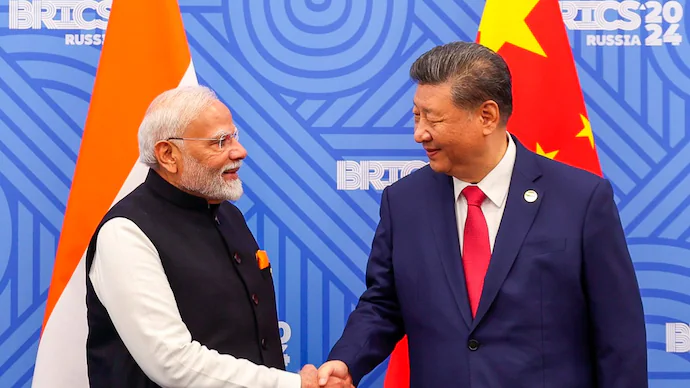
Historically, India and China have had a tumultuous relationship, punctuated by the 1962 Sino-Indian War and ongoing border disputes in regions like Ladakh and Arunachal Pradesh. However, recent developments suggest a thawing of relations. High-level diplomatic engagements, including meetings between Indian Prime Minister Narendra Modi and Chinese President Xi Jinping, have signaled a willingness to address outstanding issues through dialogue.
One of the primary drivers behind this rapprochement is economic pragmatism. China is India’s largest trading partner, with bilateral trade reaching approximately $125 billion in 2022. As both nations grapple with the economic fallout from the COVID-19 pandemic, there is a mutual interest in stabilizing trade relations. India recognizes that a cooperative relationship with China could lead to increased investment and economic growth, which is crucial for its aspirations of becoming a $5 trillion economy.
Moreover, the geopolitical landscape has shifted dramatically in recent years. The rise of China as a global superpower has prompted India to reassess its foreign policy strategies. With the United States pivoting towards Asia and forming alliances like the Quad (comprising the US, Japan, Australia, and India) to counterbalance China’s influence, India finds itself in a delicate position. Engaging with China could be seen as a strategic move to ensure that it does not become isolated in a rapidly changing geopolitical environment.
The Pakistan Factor
In stark contrast, India’s relationship with Pakistan remains deeply troubled. The two nations have fought multiple wars since their independence in 1947, primarily over the disputed region of Kashmir. The ongoing insurgency in Kashmir, which India attributes to Pakistan’s support for militant groups, has further strained relations. The Indian government has taken a hardline stance against Pakistan, particularly under the leadership of the Bharatiya Janata Party (BJP), which has emphasized national security and anti-terrorism as key components of its agenda.
The recent Pulwama attack in 2019, in which 40 Indian paramilitary personnel were killed by a suicide bomber linked to a Pakistan-based militant group, marked a significant escalation in tensions. India responded with airstrikes on a militant camp in Balakot, Pakistan, further solidifying the narrative of Pakistan as a state sponsor of terrorism. Since then, diplomatic relations have remained largely frozen, with little room for dialogue.
The Role of Domestic Politics
Domestic politics also play a crucial role in shaping India’s foreign policy. The BJP, which has a strong nationalist base, has consistently portrayed Pakistan as a threat to India’s security and integrity. This narrative resonates with a significant portion of the Indian electorate, making it politically risky for the government to pursue rapprochement with Pakistan. In contrast, engaging with China, despite historical grievances, is often framed in terms of economic opportunity and national interest, allowing the government to navigate public sentiment more effectively.
The Influence of Global Dynamics
The global geopolitical landscape is another factor influencing India’s approach. The United States has increasingly viewed India as a strategic partner in its efforts to counter China’s rise. This alignment has led to enhanced military cooperation, intelligence sharing, and joint exercises between the two nations. As India strengthens its ties with the US and other Western nations, it finds itself in a position where engaging with China becomes a balancing act—one that is necessary to maintain regional stability and economic growth.
Conversely, Pakistan’s close ties with China complicate the situation. The China-Pakistan Economic Corridor (CPEC), a flagship project under China’s Belt and Road Initiative, has deepened economic and military cooperation between the two countries. This alliance poses a strategic challenge for India, as it perceives Pakistan as a proxy for Chinese influence in the region. Thus, any attempt to engage with Pakistan could be viewed as a concession that undermines India’s strategic interests.
The Path Forward
As India navigates its relationships with China and Pakistan, the path forward remains fraught with challenges. While the recent thaw in India-China relations may open avenues for dialogue and cooperation, it is essential to recognize that underlying tensions—particularly regarding border disputes—remain unresolved. The potential for conflict still looms large, and any miscalculation could lead to renewed hostilities.
In contrast, the relationship with Pakistan appears to be at a standstill, with little indication of a breakthrough in the near future. The entrenched positions on both sides, coupled with the influence of domestic politics, make it
