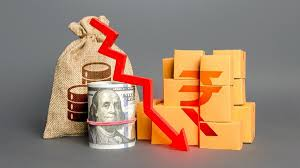
The Indian rupee concluded the trading session on a stable note, ending little changed against the US dollar, as a decline in global oil prices helped offset the broader weakness in Asian currencies. The rupee closed at ₹82.50 per dollar, reflecting a marginal fluctuation from the previous day’s close, as traders navigated a complex landscape of economic indicators and geopolitical developments.
Market Dynamics
The rupee’s resilience can be attributed to a significant drop in oil prices, which fell sharply in response to concerns over demand amid a potential global economic slowdown. Brent crude futures, the international benchmark, dipped below $90 per barrel, marking a decline of nearly 3% in recent trading sessions. This decrease is particularly beneficial for India, which is one of the largest importers of crude oil, as it alleviates some pressure on the country’s trade deficit and inflationary pressures.
Analysts noted that the fall in oil prices could provide the Reserve Bank of India (RBI) with more room to maneuver in its monetary policy, potentially leading to a more stable economic environment. “Lower oil prices are a positive development for the Indian economy, as they can help reduce the current account deficit and ease inflationary pressures,” said Rakesh Sharma, a senior economist at a leading financial institution.
Asian Currency Trends
Despite the rupee’s stability, the broader Asian currency market experienced a decline, with several regional currencies weakening against the dollar. The Japanese yen and the South Korean won both faced downward pressure, influenced by a stronger dollar and concerns over economic growth in the region. The dollar index, which measures the greenback against a basket of currencies, rose as investors sought safe-haven assets amid global uncertainties.
The divergence in performance between the rupee and other Asian currencies highlights the unique factors influencing the Indian economy. While many Asian economies are grappling with the fallout from rising interest rates and inflation, India’s economic fundamentals remain relatively robust, bolstered by strong domestic demand and a recovering manufacturing sector.
Investor Sentiment
Investor sentiment in the Indian market remained cautious, with traders closely monitoring global economic indicators and geopolitical developments. The ongoing tensions in Eastern Europe and the Middle East, coupled with concerns over the US Federal Reserve’s interest rate trajectory, have kept market participants on edge. “The geopolitical landscape is fluid, and any escalation in tensions could lead to increased volatility in currency markets,” warned Priya Mehta, a currency strategist.
Foreign institutional investors (FIIs) have also been active in the Indian equity markets, contributing to a mixed sentiment. While some investors remain optimistic about India’s growth prospects, others are adopting a wait-and-see approach, given the uncertain global economic outlook.
Outlook
Looking ahead, market analysts expect the rupee to remain range-bound in the near term, influenced by global oil prices and the performance of other Asian currencies. “The rupee is likely to trade within a narrow band as long as oil prices remain stable and there are no major shifts in global economic conditions,” said Sharma.
The RBI’s upcoming monetary policy meeting will also be a focal point for investors, as any indications regarding interest rate adjustments could impact the rupee’s trajectory. With inflationary pressures still a concern, the central bank’s decisions will be closely scrutinized.
In conclusion, the Indian rupee ended the trading session little changed against the US dollar, supported by a decline in oil prices that countered the broader weakness in Asian currencies. As global economic uncertainties persist, the rupee’s stability reflects the underlying resilience of the Indian economy, while investors remain vigilant in navigating the evolving market landscape.