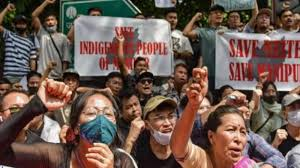
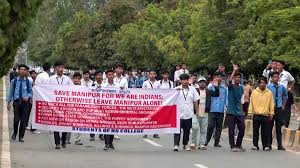
On November 14, 2024, students across Manipur staged a significant protest demanding the safe release of six individuals, including three women and three children, who were allegedly abducted by Kuki extremists during a violent incident on November 11. The protests, organized by the Students’ Front of the Coordinating Committee on Manipur Integrity, coincided with the observance of ‘Black Children’s Day,’ a poignant reminder of the ongoing crisis affecting families in the region.
Background of the Incident
- Abduction Details: The six individuals, including a 10-month-old infant, were taken from the Borobekra area of Jiribam district amidst escalating violence that resulted in the deaths of ten assailants during a confrontation with security forces. The situation has raised serious concerns about the safety of civilians in the ongoing ethnic conflict between the Meitei and Kuki-Zo communities.
- Government Response: The Bharatiya Janata Party (BJP) and Congress parties have both called for immediate action from the state government to secure the release of the hostages. A. Sharda Devi, the state BJP president, emphasized the need for humanitarian intervention, while Congress leaders submitted a memorandum to the Governor, urging for decisive measures to restore peace and safety in the region.
The Protests: A Unified Voice
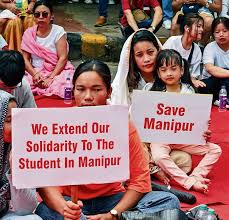
- Silent Demonstrations: Students gathered in various locations, wearing black badges as a symbol of mourning and solidarity with the abducted individuals. The protests were marked by silence, with participants holding placards that conveyed their demands, such as “No Children’s Day until the captured children are released” and “Mr. CM, we demand the release of the victims as a Children’s Day gift.”
- Criticism of Government Inaction: S. Bidyananda, the media coordinator for the organizing front, criticized the government for its failure to protect civilians and secure the release of the hostages. The students expressed their frustration over the lack of effective measures to address the ongoing violence and insecurity in the state.
Civil Society and Political Pressure
- Civil Society Involvement: Various civil society organizations have also joined the call for action, issuing a seven-day ultimatum to the government to take decisive steps to address the escalating conflict. They have threatened to withdraw support from national political parties if their demands are not met, indicating a growing discontent among the populace.
- International Appeals: The Manipur International Youth Centre and Youth Collective Manipur have reached out to the United Nations, seeking intervention regarding the abductions and the broader humanitarian crisis in the region. They have documented the incidents of violence and displacement, urging the UN to hold the perpetrators accountable under international law.
The Broader Context of Violence in Manipur
- Ethnic Tensions: The abduction incident is part of a larger pattern of violence that has plagued Manipur since the outbreak of ethnic conflict in May 2023. The ongoing clashes between the Meitei and Kuki-Zo communities have resulted in significant loss of life and property, exacerbating tensions and mistrust among different groups.
- Impact on Families: The plight of the abducted women and children has highlighted the human cost of the conflict. Families are left in anguish, fearing for the safety of their loved ones while grappling with the uncertainty of the situation. The protests serve as a reminder of the urgent need for peace and reconciliation in the region.
Calls for Action and Resolution
- Government Accountability: The protests have underscored the demand for accountability from the government in ensuring the safety of its citizens. Activists and students alike are calling for a comprehensive strategy to address the root causes of the conflict and to protect vulnerable populations from violence.
- Community Engagement: Engaging local communities in dialogue and conflict resolution efforts is essential for fostering understanding and cooperation among different ethnic groups. Initiatives aimed at building trust and promoting peace can help mitigate tensions and prevent future violence.
Conclusion: A Plea for Peace
The mass protests organized by students in Manipur reflect a growing frustration with the ongoing violence and the government’s inability to protect its citizens. As the situation continues to unfold, the demand for the safe release of the six abducted individuals remains a pressing issue that requires immediate attention from both state authorities and civil society.
The students’ actions serve as a powerful reminder of the resilience and determination of the youth in Manipur to advocate for justice and peace. Their voices echo the sentiments of many who yearn for a resolution to the conflict and a return to normalcy in their lives. The path forward will require concerted efforts from all stakeholders to ensure that such incidents do not recur and that the rights and safety of all individuals are upheld in the face of adversity.