As India gears up for the 2024 general elections, the political landscape in Maharashtra and Jharkhand is heating up, with both states set to hold assembly elections that could significantly influence the national political narrative. Scheduled for [insert date], these elections are being closely watched, not only for their immediate implications but also for the broader impact they may have on the upcoming Lok Sabha elections.
Maharashtra: A Political Battleground
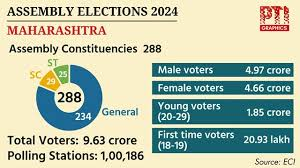
Maharashtra, India’s most populous state and an economic powerhouse, is poised to be a critical battleground in the 2024 elections. The state has a complex political landscape, characterized by a multi-party system that includes major players like the Shiv Sena, the Bharatiya Janata Party (BJP), the Nationalist Congress Party (NCP), and the Indian National Congress (INC).
The current political scenario in Maharashtra is marked by the fallout from the 2019 assembly elections, which saw the formation of a coalition government between the Shiv Sena, NCP, and INC, known as the Maha Vikas Aghadi (MVA). However, the political dynamics shifted dramatically in June 2022 when a faction of the Shiv Sena, led by Eknath Shinde, broke away to form a government in alliance with the BJP. This realignment has created a volatile political environment, with both the MVA and the Shinde-led government vying for public support.
As the elections approach, key issues are emerging that could sway voters. Economic recovery post-COVID-19, unemployment, infrastructure development, and farmers’ issues are at the forefront of public discourse. The BJP, under Chief Minister Eknath Shinde, is focusing on its development agenda, highlighting infrastructure projects and economic growth. In contrast, the MVA is emphasizing social justice, farmers’ rights, and the need for a more inclusive governance model.
The election campaign is expected to be intense, with both alliances deploying their top leaders to rally support. The BJP is likely to leverage its national leadership, including Prime Minister Narendra Modi, to galvanize voters, while the MVA will aim to present a united front, showcasing the achievements of their coalition government during its brief tenure.
Jharkhand: A Test of Regional Dynamics
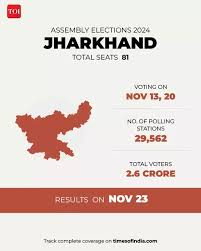
In Jharkhand, the political landscape is equally dynamic, with the ruling Jharkhand Mukti Morcha (JMM) facing challenges from the BJP and the Indian National Congress. The state has seen significant political shifts since its formation in 2000, with tribal issues, development, and governance being central to electoral debates.
The JMM, led by Chief Minister Hemant Soren, is seeking to retain power amid allegations of corruption and governance challenges. The party has focused on tribal rights, employment generation, and infrastructure development as key pillars of its campaign. However, the opposition, particularly the BJP, is capitalizing on any discontent among the electorate, emphasizing the need for a stable government that can deliver on development promises.
The BJP, which has been a formidable force in Jharkhand, is expected to field a strong candidate to challenge Soren. The party’s strategy will likely revolve around highlighting the shortcomings of the JMM government while promoting its own development agenda. The INC, although a smaller player in the state, is also working to regain its foothold by focusing on social issues and the welfare of marginalized communities.
Key Issues and Voter Sentiment
Both states are grappling with pressing issues that could influence voter sentiment. In Maharashtra, the economic fallout from the pandemic, rising inflation, and unemployment are critical concerns. The youth vote, which constitutes a significant portion of the electorate, is particularly sensitive to these issues. Additionally, the farmers’ distress, exacerbated by erratic weather patterns and market fluctuations, remains a pivotal topic in rural areas.
In Jharkhand, tribal rights and land acquisition issues are paramount. The state has a large tribal population, and their concerns regarding land rights and development are likely to play a crucial role in shaping electoral outcomes. The JMM’s commitment to tribal welfare will be tested against the backdrop of allegations of corruption and governance failures.
Moreover, both states are witnessing a growing trend of political polarization, with communal and caste-based identities becoming increasingly significant in electoral politics. This polarization could lead to a fragmented electorate, making it challenging for any single party to secure a clear mandate.
The Role of National Parties
The upcoming elections in Maharashtra and Jharkhand are not just state-level contests; they are also seen as a litmus test for national parties ahead of the general elections. The BJP, which aims to consolidate its power across the country, is keen on performing well in these states to bolster its narrative of development and governance. A strong showing in Maharashtra, in particular, would send a message of resilience and popularity for the party, especially after the political upheaval in the state.
On the other hand, the MVA and JMM are looking to counter the BJP’s narrative by showcasing their governance models and addressing local issues effectively. The performance of these regional parties will be crucial in determining the future political landscape, not just in their respective states but also in the context of the national elections.
Campaign Strategies and Alliances
As the election date approaches, campaign strategies are becoming clearer. The BJP is expected to deploy a robust campaign machinery, utilizing social media, rallies, and grassroots mobilization to reach voters. The party’s strategy will likely include highlighting its achievements at the national level while addressing local concerns through targeted messaging.
In Maharashtra, the BJP may also focus on the perceived failures of the MVA government, particularly in managing the economy and addressing public grievances. The party’s alliance with the Shinde faction of the Shiv Sena will be pivotal, as they aim to present a united front against the opposition.
The MVA, on the other hand, will need to navigate the challenges of presenting a cohesive campaign despite internal differences. The coalition partners will likely emphasize their collective achievements during their time in power and seek to connect with voters on issues of social justice and economic recovery.
In Jharkhand, the JMM will focus on consolidating its tribal base while addressing the concerns of other communities. The party’s campaign will likely highlight its commitment to tribal rights and development, countering the BJP’s narrative of corruption and inefficiency.
Voter Engagement and Turnout
Voter engagement will be a critical factor in both states. With the youth vote playing a significant role, parties will need to tailor their messages to resonate with younger voters who are increasingly concerned about employment opportunities and social issues. Engaging with voters through town halls, social media campaigns, and community outreach will be essential for all parties.
Turnout will also be a key focus, as higher voter participation can significantly impact election outcomes. Both the BJP and the opposition parties will likely invest in mobilizing their supporters to ensure that they make their voices heard at the polls.
Conclusion: A Pivotal Moment for Maharashtra and Jharkhand
The upcoming elections in Maharashtra and Jharkhand represent a pivotal moment in Indian politics, with the potential to reshape the political landscape ahead of the 2024 general elections. As parties gear up for a fierce electoral battle, the focus will be on addressing pressing local issues while navigating the complexities of national narratives.
With economic recovery, social justice, and governance at the forefront of voter concerns, the outcomes in these states could serve as a bellwether for the broader political climate in India. The stakes are high, and the results will not only determine the future of state governments but also influence the strategies and alliances of national parties as they prepare for the crucial general elections.
As the political drama unfolds, the eyes of the nation will be on Maharashtra and Jharkhand, where the voices of the electorate will ultimately shape the future of governance and political representation in India. The elections will test the resilience of political parties, the effectiveness of their campaigns, and the engagement of voters in a rapidly changing political landscape.
